Copyright © 2026 Woodvalley Vineyards Ltd

Sponsored by Alden Rose, Billericay
www.aldenrose.co.uk
Low Energy Building Design

Members of WineGB

The Great British Vineyard Guide


Find Us
Woodvalley Vineyards Ltd
Woodvalley Farm
Outwood Common Road
Billericay, Essex CM11 1ET
W3W: stand.pull.deck
T: 07926 474711
E: info@woodvalleyvineyards.co.uk
Cellar Door
Winter Opening Times:
Our Cellar Door is now Closed
Our wines can be purchased at Stockbrook Farm Shop & Nursery
Stock Road, Stock, Essex CM4 9PQ
Tel: 01277 840046


How hard could it be?
Our story began in 2018, with a conversation that, looking back, would change rather more than we could ever have imagined. We first met the owner of the land that year. He was 78, and the land had been in his family since 1950, when his father bought it with an ambition to help resurrect the British vineyard following the Second World War.
A vineyard. In England???? We thought he needed a straightjacket.
Wine came from Italy, France, New Zealand and all those other wonderfully sunny places. The idea of growing grapes and making wine in Essex seemed, frankly, a little err, optimistic. But we offered to help fund the start-
Then, one Friday night on our fourth (or so) glass of something in The Chequers, the four of us were talking about the vineyard, the future and what we might eventually do when retirement came along.
Growing grapes. Making wine. Spending our days outside rather than behind desks. It actually sounded rather good.
How hard could it be?
As it turns out, quite hard.
OUR STORY
How The Four Non-
400 vines and an experiment
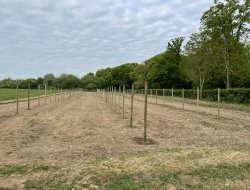
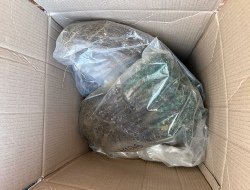
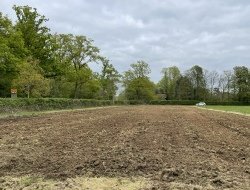
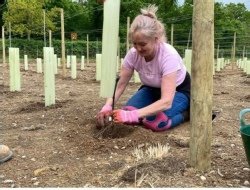
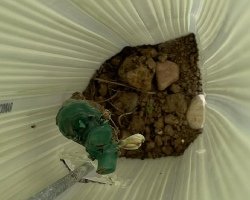
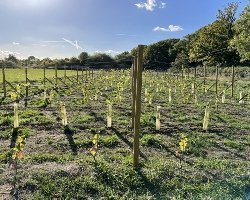
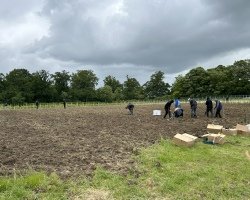
In 2022, we managed to buy what seemed to be the last 400 vines available in the UK: 200 Chardonnay and 200 Pinot Noir. We prepared the ground and planted every one by hand!
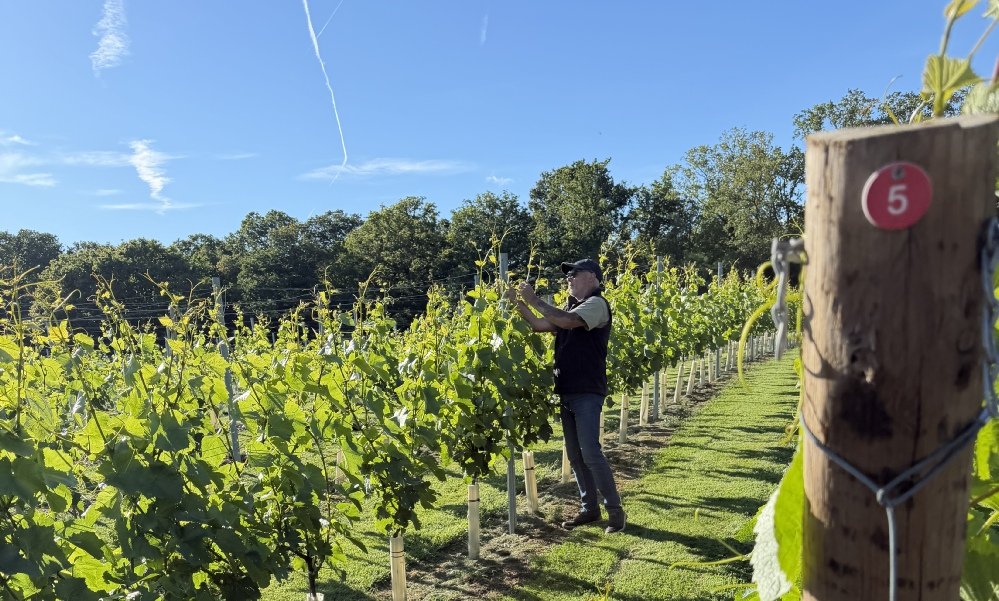
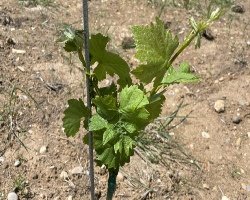
That first year was really an experiment. We learned how to plant, train and care for vines; how quickly weeds grow; how much attention a vineyard needs; and just how many things there are that can potentially go wrong. Youtube was our best friend, along with mountains of books on Viticulture.
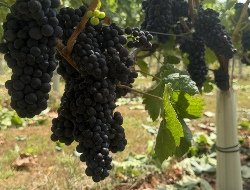
By the end of the season, however, something remarkable had happened. We hadn't killed them.
“What are you doing with all the grapes?”
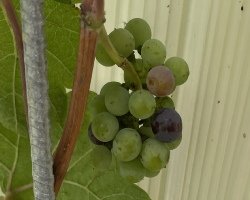
By our fourth year, we'd learned an enormous amount — often the hard way — but we'd also reached the point where we needed some expert guidance. We brought in a vineyard consultant, the incredible Blago Dishkov of Vitiforce, a 3rd Generation Viticulturist originally from Bulgaria with decades of experience and knowledge.
After looking around the vineyard, he asked us a fairly obvious question: “What are you going to do with all the grapes?”
Our answer was equally straightforward. “Nothing.” Apparently, this was not the correct answer.
He suggested that perhaps, having gone to all the trouble of creating a vineyard and growing the grapes, we might actually like to make some wine 😂.
It was a revolutionary idea. From grapes to wine????
That conversation led us to Nene Valley Winery in Northamptonshire, and winemakers Will and Salvatore. A recent set up using state-
Until then, Woodvalley had been about vines, soil, weather, pruning, tying down, mowing, feeding and an endless battle with whatever nature decided to throw at us that week. Suddenly, it was about wine.
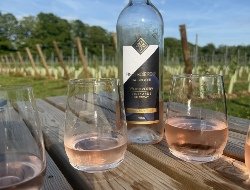
Our first harvest was divided, allowing us to create our 2025 Limited Vintage Début — a pale English rosé — while another part began a much longer journey -
That 2025 sparkling remains quietly on its lees, doing precisely what good sparkling wine should do while we attempt to be patient.
YEAR TWO: Encouraged by this unexpected success, we did the obvious thing. We ordered another 1,300 Pinot Noir.
Suddenly, our little experiment had become rather more serious. There were considerably more vines, considerably more work and an ever-
There was something immensely satisfying about being outdoors, working with the land and watching something we had created slowly begin to take shape.
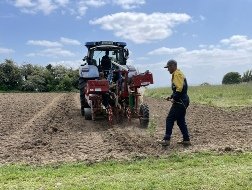
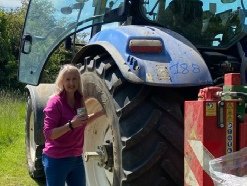
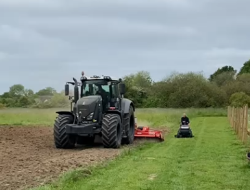
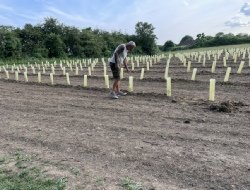
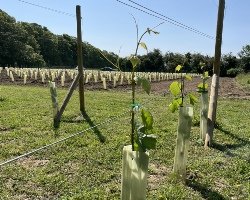
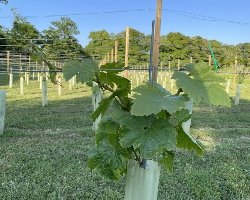
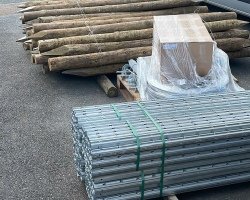
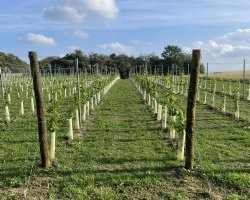
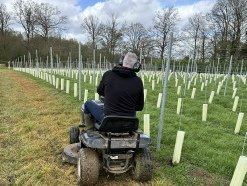
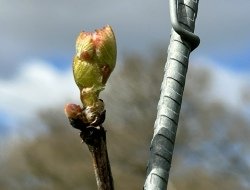
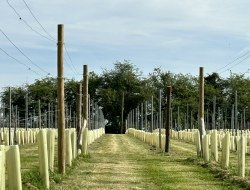
YEAR THREE: Looking after 1700 vines was doable, we all had a full time job. As young vines, they didn’t need that much looking after and we were going for growth, not fruit. And they were all doing really well.
So naturally, the following year, we planted another 1,300 -
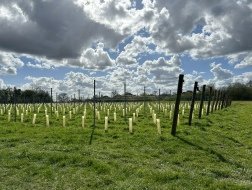
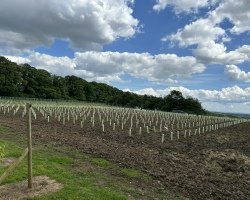
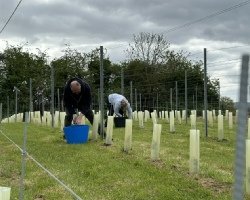
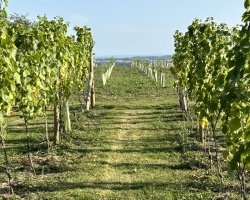
Then came 2026...
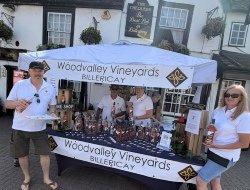
In May 2026, we released our Début. We had absolutely no idea what was about to happen. Within weeks, hundreds of bottles had left the vineyard through our launch at The Chequers and our Open Day.
Then came our first Silver medal. And then another.
Our little wine, a vineyard planted by four people who once thought growing grapes in England sounded ridiculous, had become a double award-
The following three months were complete madness. Cellar-
Somewhere along the way, our retirement project had developed a life entirely of its own.
And we wouldn't change it.
The Future?
The story is only beginning, Woodvalley is still young. We're still learning. We're still experimenting. We still occasionally stand in the middle of the vineyard wondering what on earth we've got ourselves into.
But that's part of its charm.
What began with a conversation in 2018 has become thousands of vines, award-
We may have started with zero farming knowledge, a stack of books and YouTube videos.
But sometimes the best adventures begin with somebody asking:
How hard could it be?